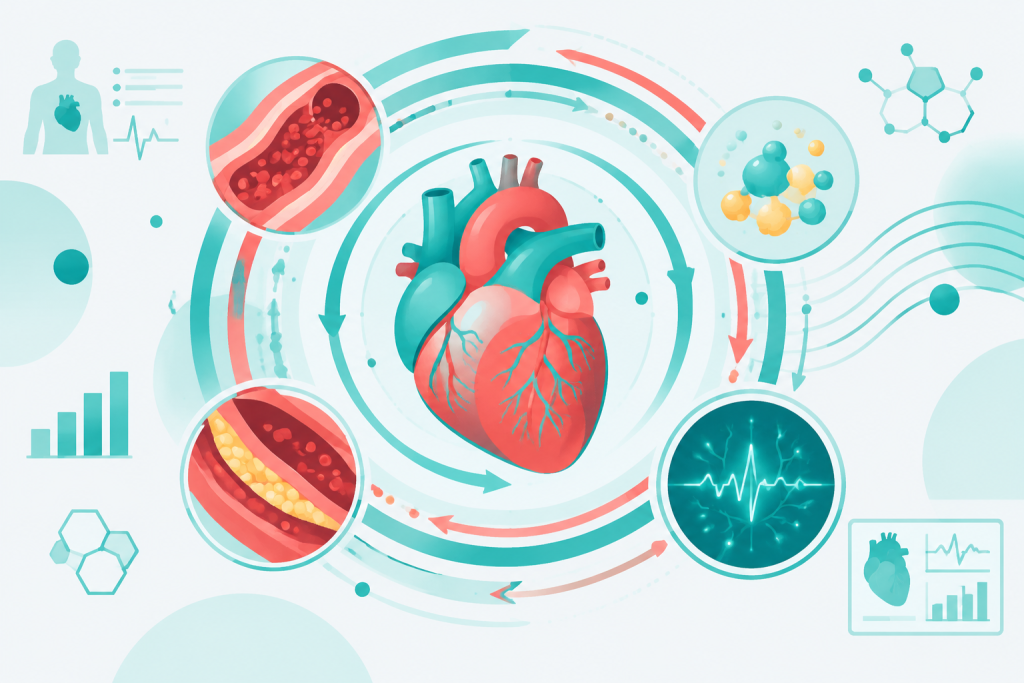
People often associate anabolic-androgenic steroids with muscle growth and athletic performance, but their effects extend well beyond skeletal muscle. The cardiovascular system—heart, blood vessels, and the blood itself—can be influenced by these compounds through several overlapping pathways. Whether someone is considering testosterone replacement under medical supervision or using higher doses for physique enhancement, understanding the cardiovascular risks and uncertainties matters.
- Anabolic steroids can affect the heart and blood vessels through direct action on cardiac muscle, changes in blood lipids, shifts in blood pressure, and alterations in heart rhythm.
- Observed changes include left ventricular hypertrophy, unfavourable cholesterol profiles, increased arterial stiffness, and a higher reported risk of arrhythmia in some users.
- Anyone with pre-existing cardiovascular conditions faces additional risks and should only consider hormonal treatments under direct medical supervision.
How Anabolic Steroids Affect the Cardiovascular System
Mechanisms through which anabolic steroids influence heart and blood vessel function
Anabolic-androgenic steroids influence the cardiovascular system in more than one way. At the most basic level, they are androgens—substances that interact with androgen receptors located not only in skeletal muscle but also in cardiac muscle cells and the smooth muscle within blood vessel walls. When these receptors are activated, they can change how cells grow, how proteins are synthesised, and how calcium moves inside the cell. Calcium handling is especially important for the heart because every heartbeat depends on carefully timed calcium release and reuptake.
Beyond receptor binding, many steroids are metabolised into other active compounds. Testosterone, for example, can be converted into estradiol through aromatase enzymes or into dihydrotestosterone through 5-alpha reductase. These metabolites may affect vascular tone, endothelial function, and clotting factors. Some research suggests that estradiol can have vessel-relaxing effects, while dihydrotestosterone may promote vasoconstriction in certain vascular beds. The balance between these metabolites varies from person to person and from compound to compound, which may help explain why cardiovascular responses are not uniform across all users.
Steroids can also affect the renin-angiotensin-aldosterone system, a hormonal cascade that regulates blood pressure and fluid balance. Activation of this system can lead to sodium and water retention, increased blood volume, and elevated blood pressure. At the same time, some androgens appear to reduce nitric oxide bioavailability. Nitric oxide normally helps blood vessels relax and widen; when its activity is impaired, vessels may become stiffer and less responsive.
Direct effects on cardiac muscle tissue and vascular smooth muscle
Cardiac muscle tissue responds to androgen receptor stimulation by altering its growth signals. In practical terms, this can mean an increase in the size of individual heart muscle cells, known as cardiomyocyte hypertrophy. When many cells enlarge, the heart wall becomes thicker and the overall mass of the heart increases. This is not automatically harmful—the heart adapts to exercise in a similar way—but the nature and extent of the change matter.
In vascular smooth muscle, androgen receptor activation can promote cell proliferation and migration. These processes are part of how arteries remodel over time. When combined with other factors such as high blood pressure or unfavourable cholesterol levels, this remodelling may contribute to arterial stiffening and reduced elasticity. Stiffer arteries mean the heart must work harder to pump blood, which can place additional strain on the left ventricle over time.
There is also evidence that some anabolic steroids can influence clotting factors. Changes in platelet aggregation and fibrinolysis have been reported in research settings. Anything that tips the balance towards clot formation could raise the risk of events such as myocardial infarction or stroke, particularly in people who already have plaque build-up in their arteries.
Hormonal pathways and receptor interactions
The androgen receptor is the primary mediator of anabolic steroid action, but it is not the only player. Steroids can also interact with glucocorticoid receptors, mineralocorticoid receptors, and progesterone receptors, depending on the specific compound and its chemical structure. These off-target interactions can produce effects that are not strictly “anabolic” or “androgenic”. For instance, some steroids have mineralocorticoid-like activity, which can promote fluid retention and electrolyte imbalances.
Hormonal pathways outside the steroid receptors matter too. Thyroid function, insulin sensitivity, and growth hormone/IGF-1 signalling can all be influenced by androgen use, and each of these has downstream cardiovascular implications. The result is a complex hormonal environment in which the cardiovascular system may be exposed to multiple simultaneous pressures.
Structural Changes: Enlarged Heart and Ventricular Hypertrophy
Can testosterone and other anabolic steroids cause an enlarged heart
The research literature has associated anabolic steroid use with increases in heart size and wall thickness. Testosterone and its synthetic derivatives can stimulate cardiomyocyte growth, leading to what is called cardiac hypertrophy. In some studies of steroid users, the left ventricle—the chamber responsible for pumping blood to the body—was larger and had thicker walls than in non-using controls.
Whether this enlargement is harmful depends on context. A larger heart is not always a diseased heart. Endurance athletes, for example, develop what is known as “athlete’s heart”, characterised by increased chamber volume, mild wall thickening, and preserved cardiac function. Steroid-induced enlargement, however, may follow a different pattern and may occur alongside functional impairment.
Left ventricular hypertrophy and chamber remodeling
Left ventricular hypertrophy refers specifically to thickening of the wall of the left ventricle. It can occur when the heart is chronically exposed to increased workload, such as from high blood pressure or from the growth-promoting signals of anabolic steroids. Over time, this thickening can alter the shape and function of the chamber. The ventricle may become stiffer, less able to relax between beats, and less efficient at filling with blood.
Research in steroid-using populations has reported both concentric remodelling, where the walls thicken without a proportional increase in chamber size, and eccentric remodelling, where the chamber dilates. Some studies have also observed reductions in diastolic function—the phase of the cardiac cycle when the heart relaxes and fills. These changes may not cause symptoms early on, but they could contribute to more serious problems if use continues or if other risk factors are present.
Differences between athlete’s heart and steroid-induced cardiac changes
Telling the difference between a healthy athletic heart and one affected by anabolic steroids can be difficult on imaging alone, but there are clues. The table below summarises the main distinctions.
| Feature | Athlete’s heart | Steroid-induced changes |
|---|---|---|
| Pattern of remodeling | Balanced: larger chamber volume with proportional wall thickness | Often concentric: wall thickening out of proportion to chamber size |
| Function | Preserved or enhanced pumping and filling function | May show reduced diastolic function or impaired relaxation |
| Blood pressure | Usually normal or low | Frequently elevated |
| Lipid profile | Generally favourable | Often unfavourable, with low HDL and higher LDL |
| Reversibility | Gradually regresses with detraining | May partially improve after discontinuation, but not always fully reversible |
These differences are not absolute, and overlap exists. A clinician evaluating an athlete or bodybuilder with an enlarged heart would typically consider training history, drug use history, blood pressure, lipid levels, and functional tests before drawing conclusions.
Effects on Heart Rate, Rhythm, and Blood Pressure
What are the effects of steroids on heart rate
Anabolic steroid use has been associated with changes in resting heart rate, though the direction and magnitude vary. Some users experience a mild increase in resting heart rate, possibly due to increased blood volume, altered autonomic nervous system activity, or changes in thyroid and metabolic rate. Others may not notice a consistent change.
During exercise, the heart rate response can also be affected. Fluid retention and increased haematocrit—the concentration of red blood cells in the blood—may increase the effort required to circulate blood and could alter the heart-rate response. The effect varies between individuals and compounds.
Arrhythmia risk and electrical conduction changes
Arrhythmias are among the cardiovascular concerns associated with anabolic steroid use. Atrial fibrillation, ventricular tachycardia, and sudden cardiac death have all been reported in case series and observational studies involving steroid users. Proposed mechanisms include structural remodelling of the heart, electrolyte disturbances, altered autonomic tone, and changes in cardiac ion channels.
Important: Sudden cardiac death has been reported in some anabolic steroid users, particularly those using high doses or combining multiple compounds. Anyone experiencing palpitations, dizziness, fainting, or chest discomfort should seek medical evaluation promptly.
Androgens can influence the electrical conduction system of the heart by affecting potassium, magnesium, and calcium levels. They can also prolong the QT interval in some individuals, a finding associated with increased arrhythmia risk. The risk may be higher with supraphysiological doses and with polypharmacy—the simultaneous use of multiple steroids or other substances.
Hypertension development and blood pressure regulation
High blood pressure is one of the more commonly reported cardiovascular effects of anabolic steroid use. Possible mechanisms include sodium and water retention, increased haematocrit, activation of the renin-angiotensin-aldosterone system, and increased arterial stiffness. Some compounds appear to raise blood pressure more than others, but blood-pressure effects cannot be assumed to be absent at supraphysiological doses.
Elevated blood pressure places continuous stress on the arterial walls and the heart. Over months or years, this may contribute to atherosclerosis, left ventricular hypertrophy, heart failure, kidney damage, and stroke. Regular blood-pressure checks can help identify changes that require medical assessment.
Impact on Cholesterol and Atherosclerosis Risk
Changes in HDL, LDL, and triglyceride levels
Anabolic steroids can alter blood lipids. A commonly reported pattern is a reduction in high-density lipoprotein (HDL), often called “good cholesterol”, and an increase in low-density lipoprotein (LDL), or “bad cholesterol”. Triglyceride levels may also rise. These changes can be more pronounced with oral 17-alpha-alkylated steroids, which pass through the liver and affect hepatic lipid metabolism.
Injectable testosterone and its esters tend to produce more modest lipid changes, especially at therapeutic doses, but unfavourable shifts can still occur. The route of administration, the dose, the specific compound, and individual genetics all play a role. The extent and timing of changes vary between individuals.
Increased cardiovascular disease risk factors through lipid profile alterations
Major cardiovascular risk factors include high blood pressure, tobacco use, an unhealthy diet, physical inactivity, harmful alcohol use, and dyslipidaemia—an unhealthy balance of blood fats. When anabolic steroids push HDL down and LDL up, they may add another adverse factor to the overall risk profile.
The presence of multiple risk factors has a cumulative effect. A person who uses steroids, has high blood pressure, smokes, and carries excess body fat may face a substantially higher cardiovascular risk than someone with only one of these factors. This is why a comprehensive risk assessment is more useful than looking at any single laboratory value in isolation.
For readers who want to understand how individual compounds differ in their cardiovascular impact, our detailed breakdown of individual steroid compounds and their specific cardiac profiles covers the nuances between testosterone, nandrolone, trenbolone, and orals such as stanozolol and oxymetholone.
Accelerated plaque formation and arterial stiffness
When LDL cholesterol is elevated and HDL is low, the arterial wall may be more susceptible to atherosclerotic plaque formation. Plaques are deposits of cholesterol, inflammatory cells, and fibrous tissue that build up inside arteries. Over time, they can narrow the vessel and reduce blood flow. If a plaque ruptures, it can trigger a blood clot that blocks the artery, potentially leading to a heart attack or stroke.
Studies in long-term anabolic steroid users have reported increased carotid intima-media thickness and reduced arterial compliance, both markers associated with early atherosclerosis and vascular stiffness. These findings suggest that vascular changes may begin before symptoms appear. Because atherosclerosis develops slowly, the cardiovascular burden may only become evident years after use has started.
Interaction with Existing Heart Conditions
Do steroids worsen heart failure and other pre-existing conditions
For people who already have heart disease, anabolic steroids may add to existing cardiovascular strain. In heart failure, the heart is already struggling to pump effectively. The fluid retention caused by some steroids increases blood volume, which raises the workload on the failing heart. Elevated blood pressure adds further strain. Arrhythmias, which are more common in damaged hearts, may become more frequent or more dangerous.
Coronary artery disease is another major concern. If arteries are already narrowed by plaque, increases in blood pressure, clotting tendency, or oxygen demand could contribute to angina or a heart attack. Steroid-related changes in clotting factors and vascular tone may be particularly concerning in this population.
Contraindications for individuals with cardiovascular disease
Significant cardiovascular disease generally warrants specialist assessment before any use of anabolic steroids outside a clearly indicated medical context. This includes uncontrolled hypertension, heart failure, recent myocardial infarction, severe arrhythmias, and stroke. Even in people with well-controlled conditions, the decision to use testosterone or other androgens should be made only after a thorough evaluation by a cardiologist or endocrinologist.
It is also worth noting that some cardiovascular conditions may be undiagnosed until they are unmasked by steroid use. A young person with mild hypertrophic cardiomyopathy or a subtle electrical conduction abnormality might feel fine at baseline but develop symptoms or arrhythmias after starting a high-dose steroid cycle.
Monitoring requirements and cardiovascular disease treatment considerations
Anyone considering anabolic steroid use should discuss cardiovascular screening with a qualified healthcare provider. Depending on the person’s history and risk factors, this may include blood-pressure measurement, a lipid panel, an electrocardiogram, and possibly an echocardiogram. During use, follow-up may include repeat blood-pressure checks, lipid panels, or ECGs if indicated. Further tests, such as stress testing or coronary calcium scoring, are not appropriate for everyone and should be considered in the context of an individual assessment.
If cardiovascular abnormalities develop, discontinuation of the offending substance may be considered under medical guidance. Depending on the findings, management may include blood-pressure control, lipid-lowering therapy, lifestyle modifications, and in some cases cardiology referral. The specifics depend on the individual and should be determined by a qualified healthcare provider.
Informational notice: This article is for educational purposes only and is not a substitute for professional medical advice, diagnosis, or treatment. Anabolic steroids can affect the cardiovascular system in complex ways, and individual responses vary. If you are considering using these substances, or if you currently use them, consult a qualified healthcare provider—especially if you have high blood pressure, high cholesterol, a history of heart disease, or any other chronic condition. We do not promise any specific health outcome for any reader.