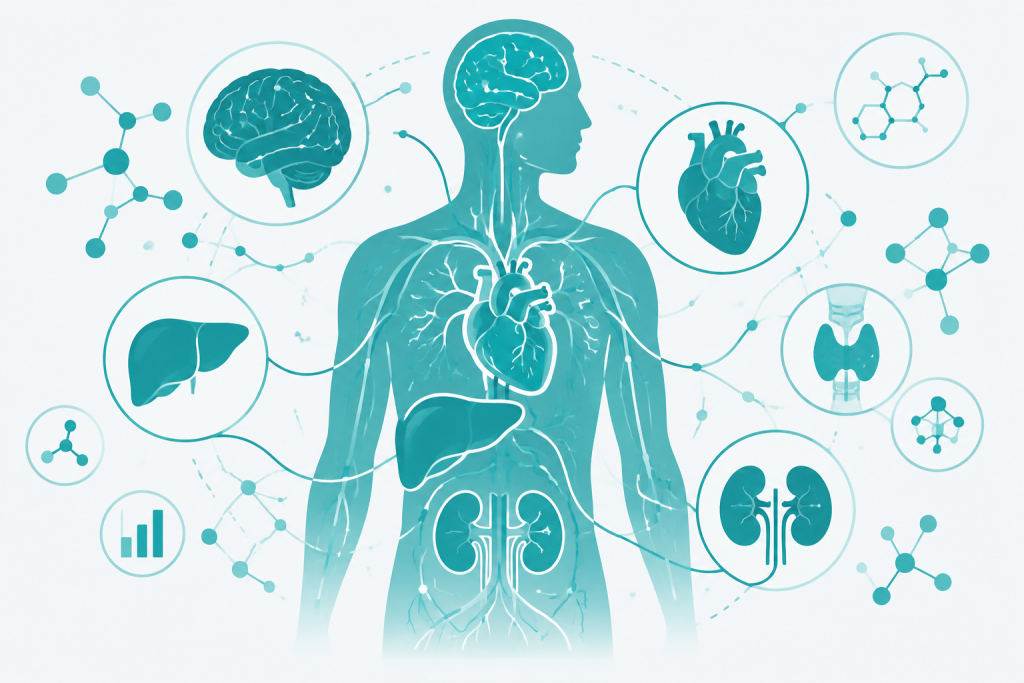
Anabolic-androgenic steroids (AAS) are synthetic molecules derived from testosterone. In legitimate medical practice they are used for conditions such as hypogonadism, delayed puberty, and certain muscle-wasting diseases. In sport and fitness subcultures, they are sometimes taken to increase muscle mass, reduce body fat, or speed recovery. When use extends beyond short therapeutic courses into months or years of repeated cycles, the exposure crosses into “long-term.” During that time, circulating androgen levels are often far above the physiological range, and multiple organ systems can be affected. This article summarises what researchers have reported about long-term AAS effects. It is written as reference material, not as a guide to use, and it does not encourage starting or continuing AAS outside medical supervision. If you are still learning how these substances differ, our comprehensive guide to anabolic steroid compounds and their classification covers the different types involved in these long-term effects.
- Long-term AAS use is linked to structural and functional heart changes, elevated blood pressure, unfavourable cholesterol shifts, and impaired glucose metabolism.
- Neuropsychiatric reports include mood swings, irritability, depression, and—in some studies—brain structural and cognitive differences compared with non-users.
- The liver, kidneys, and hormone axis can all be affected. Oral 17α-alkylated steroids carry the clearest hepatic risk, while suppression of natural testosterone production can persist after stopping.
- Reproductive effects range from testicular atrophy and reduced sperm counts to infertility and sexual dysfunction, with recovery timelines varying widely.
Cardiovascular and Metabolic Effects of Long-Term AAS Use
Cardiovascular disease is one of the most consistently reported concerns in long-term AAS users. The heart, blood vessels, and metabolic systems all appear to respond to chronic supraphysiological androgen exposure, and several mechanisms may operate at the same time.
Structural changes in the heart
Long-term AAS use has been associated with left ventricular hypertrophy (LVH), in which the wall of the heart’s main pumping chamber becomes thicker and the chamber may become stiffer. In some users, this translates into increased left ventricular mass and altered diastolic function—the heart’s ability to relax and fill between beats. A review of AAS-related adverse effects notes that use is linked with changes in cardiac structure and function, including reduced left ventricular relaxation and increased wall thickness (Angell et al., 2012). These changes do not always cause symptoms while the user is young, but they may raise long-term concerns about arrhythmia, heart failure, and other cardiac events.
Blood pressure elevation and hypertension risks
Chronic AAS exposure is frequently associated with elevated blood pressure. Possible mechanisms include sodium and water retention, increased blood volume, activation of the renin-angiotensin-aldosterone system, changes in vascular tone, and endothelial dysfunction. Over time, sustained high blood pressure increases the workload on the heart and arteries and is a recognised risk factor for hypertensive heart disease, stroke, and kidney damage. Blood pressure can remain elevated outside active cycles in some users, although the reasons are not always clear.
Lipid profile abnormalities and atherosclerosis risk
AAS can shift blood lipid levels in directions associated with atherosclerosis. High-density lipoprotein (HDL) cholesterol often falls, while low-density lipoprotein (LDL) cholesterol, apolipoprotein B, and triglycerides may rise. Some studies also report elevated haematocrit, which increases blood viscosity and may further strain the cardiovascular system. The combination of unfavourable lipids, higher blood pressure, and structural heart changes creates a pattern of risk that clinicians who treat former AAS users often monitor closely.
Effects on insulin sensitivity and glucose metabolism
Although AAS are sometimes used to improve body composition, long-term use may impair insulin sensitivity. Some users develop impaired glucose tolerance or features of the metabolic syndrome, including increased visceral adiposity and dyslipidaemia. The effect may depend on dose and duration and may not resolve immediately after stopping use. Testing of fasting glucose, insulin, and HbA1c may therefore be considered in people with a history of prolonged AAS exposure.
Neuropsychiatric and Cognitive Consequences
The brain is another target of chronic AAS exposure. Testosterone and its synthetic analogues interact with androgen receptors throughout the central nervous system, and long-term supraphysiological levels may affect mood, behaviour, and possibly brain structure.
Mood disturbances and psychiatric symptoms
Clinicians and researchers have described a broad spectrum of mood symptoms in long-term AAS users. During use, some individuals experience increased irritability, emotional lability, hypomania, euphoria, or grandiosity; others may feel heightened confidence and a reduced perception of risk. During withdrawal, when endogenous testosterone has been suppressed, depressive symptoms, fatigue, anhedonia, insomnia, and—in severe cases—suicidal ideation have been reported. The popular phrase “roid rage” oversimplifies the picture: not every user becomes aggressive, but population studies and case series do report higher rates of mood and anxiety symptoms among those with a history of AAS use.
Brain structural and functional abnormalities documented in long-term users
Neuroimaging studies in long-term AAS users have reported differences compared with non-using controls. Reported findings include differences in brain regions involved in emotion regulation and impulse control, such as the amygdala, prefrontal cortex, and basal ganglia, as well as changes in functional connectivity and white-matter integrity. A review of AAS-related harms notes evidence for neuropsychiatric effects and changes in brain structure and function (Angell et al., 2012). Whether these changes are fully reversible after cessation remains an active area of research.
Cognitive effects and potential long-term neurological changes
Some studies have reported deficits in memory, attention, executive function, processing speed, and visuospatial ability among long-term AAS users, although results are not uniform across all research. Potential mechanisms include direct androgen effects on neurons, vascular changes in the brain, and psychological factors such as sleep disruption or mood disorders. Because cognitive testing is complex and user populations differ in substance use, training history, and mental health, it is difficult to isolate AAS as the sole cause. Even so, the pattern is concerning enough that researchers continue to study it.
Behavioural changes associated with chronic use
Beyond mood and cognition, chronic AAS use is associated with behavioural shifts. These can include increased impulsivity, aggression, hostility, risk-taking, antisocial behaviour, and relationship problems. Some users develop a pattern of use that resembles dependence, with continued use despite adverse physical or social consequences. Many report difficulty stopping because of fear of losing muscle, withdrawal symptoms, or psychological reliance on the drug-induced state. These behavioural dimensions are important because they can influence whether someone seeks help and how successful cessation is.
Hepatic, Renal, and Endocrine System Effects
Organs that metabolise, filter, or respond to hormones are especially relevant when considering long-term AAS exposure. The route of administration and the specific compound influence the level of risk.
Liver toxicity and hepatic dysfunction from oral steroids
Orally active AAS are typically 17α-alkylated to survive first-pass liver metabolism. This structural modification alters how the compounds are processed and is associated with greater hepatic strain. Long-term use of oral 17α-alkylated AAS has been linked to elevated liver enzymes, cholestasis, jaundice, peliosis hepatis (blood-filled cysts in the liver), benign hepatic adenomas, and—in rare cases—hepatocellular carcinoma. Large adenomas can also rupture, causing internal bleeding. Injectable AAS appear to carry less direct hepatic risk, although any exogenous androgen can influence liver enzymes in susceptible individuals. A comprehensive review of AAS adverse effects describes hepatotoxicity as a well-documented consequence, particularly for oral compounds (Sagoe et al., 2021).
Kidney function impairment
The kidneys can also be affected by chronic AAS use. Reported findings include proteinuria, haematuria, and renal damage such as focal segmental glomerulosclerosis and tubulointerstitial disease. Mechanisms may include direct toxic effects of AAS metabolites, elevated blood pressure, increased muscle mass leading to higher filtration demands, and rhabdomyolysis in extreme training contexts. Kidney changes may develop gradually and may not be obvious without laboratory testing or biopsy, so renal function monitoring may be considered in people with prolonged exposure.
Suppression of natural testosterone production and hypothalamic-pituitary-gonadal axis dysfunction
When the body detects high levels of exogenous androgens, the hypothalamic-pituitary-gonadal axis reduces its own output. Gonadotropin-releasing hormone (GnRH) secretion from the hypothalamus is suppressed, reducing luteinising hormone (LH) and follicle-stimulating hormone (FSH) release from the pituitary. Because LH drives testosterone production in the testes and FSH supports sperm production, chronic suppression can cause markedly reduced endogenous testosterone and spermatogenesis. The degree of suppression depends on the dose, duration, and specific compounds used.
Long-term hormonal imbalances
After stopping AAS, the hypothalamic-pituitary-gonadal axis may recover, but recovery is not guaranteed and can take months or years. Some former users experience persistent hypogonadotropic hypogonadism, with low testosterone, low LH/FSH, and symptoms such as fatigue, low mood, reduced libido, and loss of muscle mass. Other hormonal effects can include gynecomastia from aromatisation of AAS to oestrogen, elevated prolactin, altered sex hormone-binding globulin levels, and changes in thyroid and cortisol dynamics. These imbalances may require endocrinological evaluation and, in some cases, ongoing management.
Reproductive and Sexual Health Complications
Because AAS mimic and override the body’s natural androgen signalling, the reproductive system is among the first to show signs of long-term exposure.
Testicular atrophy and reduced sperm production
Testicular size commonly decreases during AAS use because the Leydig cells, which produce testosterone, receive little stimulation from LH. Seminiferous tubules also receive less FSH support, leading to reduced sperm production. Inhibin B levels may fall, providing another biochemical marker of Sertoli cell activity. These effects may be detected through physical examination, hormone panels, and semen analysis. In some long-term users, the changes can be pronounced even after stopping the drugs.
Infertility risks and recovery timelines
Reduced sperm count and motility can lead to infertility. Some men become oligospermic or azoospermic during use. Recovery timelines vary: some see improvement within several months of cessation, while others require a year or more. Factors that influence recovery include the duration of use, the total cumulative dose, age, baseline fertility, and whether other drugs were used. Medical interventions such as human chorionic gonadotropin (hCG), selective oestrogen receptor modulators, or recombinant FSH may be used under specialist supervision, but they do not restore fertility in every case.
Sexual dysfunction
Sexual function can be affected both during and after AAS use. While some users report heightened libido during cycles, others experience erectile dysfunction, reduced ejaculate volume, difficulty achieving orgasm, or emotional detachment, especially when oestrogen or prolactin levels become imbalanced. After stopping, the abrupt drop in circulating androgens can cause loss of libido and erectile difficulties that may persist until the hormone axis recovers—or longer, if recovery is incomplete.
Persistent reproductive system changes after cessation
Even after AAS are discontinued, some reproductive changes may persist. These can include ongoing testicular atrophy, persistently low sperm counts, and lasting hypogonadism. The risk of persistence may be greater with longer duration and higher cumulative exposure. For men concerned about future fertility, this is a relevant consideration when evaluating the long-term effects of chronic AAS use.
Defining Long-Term Use and Dose-Dependent Risks
Not all AAS exposure carries the same risk profile. Understanding how duration, dose, and cumulative exposure shape outcomes is essential for interpreting the literature.
What constitutes “long-term” in medical and performance-enhancement contexts
There is no single universal threshold, but researchers often consider use lasting more than one to two years, or repeated multi-week cycles over several years, as long-term exposure. Some studies define chronic use by total weeks of exposure; others by years of regular use. The key point is that the body is exposed to supraphysiological hormone levels repeatedly or continuously, with limited time for recovery between cycles.
How duration and dosage correlate with severity of effects
Risk generally increases with higher doses and longer durations. Use of multiple compounds simultaneously (“stacking”), escalating doses upward (“pyramiding”), and remaining on cycles with minimal breaks have been associated with more severe adverse effects, although individual susceptibility varies widely. Genetics, age, baseline health, training load, nutrition, sleep, and use of other substances all modify the final risk. This means that two people using similar doses can have very different outcomes.
Threshold above which reversibility becomes questionable
Some effects appear to improve after cessation, especially if use was brief and doses were moderate. Blood pressure, lipid levels, and sperm counts may show partial or full recovery. Other changes—such as prolonged hypothalamic-pituitary-gonadal axis suppression, established left ventricular hypertrophy, or advanced liver or kidney damage—may be only partly reversible or irreversible. The longer and heavier the exposure, the less likely complete recovery becomes. This uncertainty is part of why clinicians emphasise early assessment and regular monitoring.
Cumulative exposure and organ damage progression
Organ systems do not necessarily reset between cycles. Repeated injury to the liver, kidneys, heart, and blood vessels may accumulate over time, producing progressive changes that may first appear as mild laboratory abnormalities and later become clinically significant. Cumulative exposure is therefore a useful concept for anyone evaluating risk: even cycles that seem manageable individually can add up when repeated over years.
Important: The effects described above are associations and risks documented in research, not predictions of what will happen to any specific person. If you have used AAS and are concerned about your health, consult a qualified clinician for individualised testing and guidance.
Disclaimer: This article is for informational purposes only and is not a substitute for professional medical advice, diagnosis, or treatment. Before using any hormone-related substance, or if you are currently using or have previously used anabolic steroids, speak with a licensed healthcare provider—especially if you are pregnant, planning pregnancy, taking prescription medications, or have chronic health conditions. Individual responses vary, and no specific outcome can be promised.