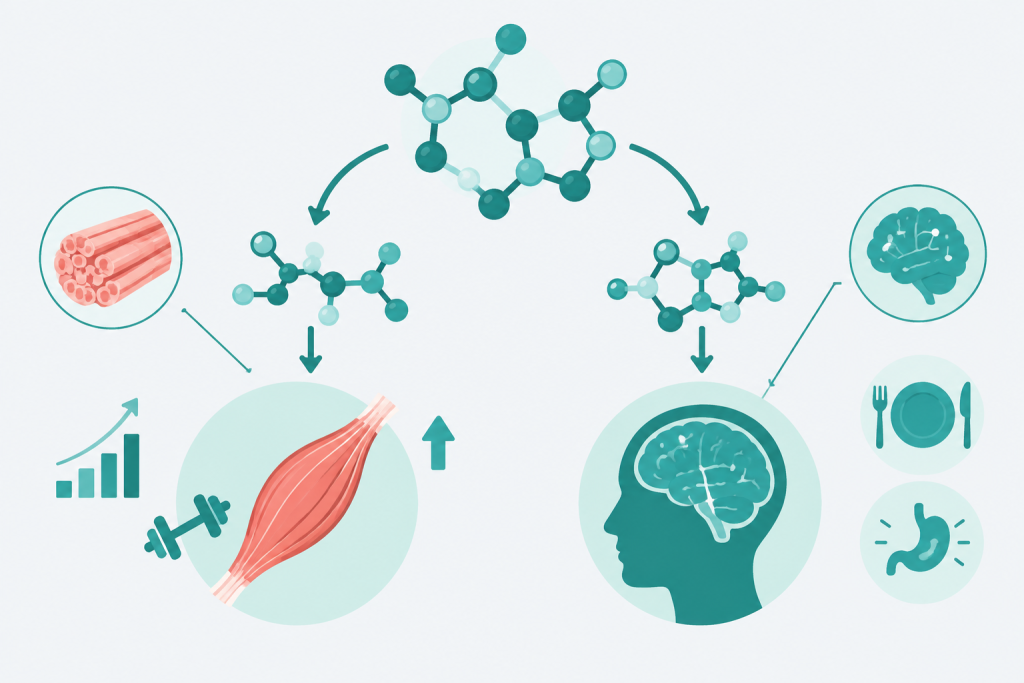
Anabolic-androgenic steroids (AAS) are usually discussed in terms of muscle growth, yet their effects on appetite and metabolism are also relevant to understanding how these compounds may act. Some users report a sharp increase in hunger, while others notice little change or even feel less interested in food. That variation may reflect differences in chemical structure, androgenic potency, and how each compound interacts with the brain, gut, and endocrine system.
- Appetite effects differ by compound and individual: more androgenic steroids may stimulate hunger more strongly, while milder or non-aromatising compounds may have a weaker effect.
- Anabolic steroids are not corticosteroids: drugs such as prednisone can increase appetite through different mechanisms and may contribute to muscle breakdown rather than muscle building.
- Metabolic changes are mostly indirect: AAS can increase protein synthesis and nitrogen retention; any increase in energy expenditure is more likely to reflect added lean mass than a direct fat-burning effect.
- Food intake matters: without enough calories and protein, the muscle-building effect of any anabolic steroid is likely to be limited.
How Anabolic Steroids Affect Appetite: The Core Mechanisms
The link between anabolic steroids and appetite starts with androgen receptors. These receptors are found throughout the body, including areas of the brain involved in hunger regulation, such as the hypothalamus. When a synthetic androgen binds to these receptors, it can influence signalling pathways involved in hunger, satiety, and energy balance. The result is not uniform across all compounds, because receptor activity and downstream effects depend heavily on each steroid’s androgenic profile.
More androgenic compounds may have a stronger influence on appetite signals. They can affect the expression of neuropeptides involved in hunger, as well as ghrelin and leptin signalling, and may alter the body’s perceived energy needs. At the same time, compounds that convert to oestrogen through aromatisation may also affect appetite, since oestrogen interacts with some of the same hypothalamic circuits. This may help explain why testosterone and certain testosterone-derived steroids are sometimes associated with noticeable hunger increases, while others produce a subtler effect.
Anabolic steroids should be distinguished from corticosteroids such as prednisone or dexamethasone. Corticosteroids can increase appetite, sometimes substantially, but they act through different pathways involving the hypothalamic-pituitary-adrenal axis and glucose regulation. They can also have catabolic effects on muscle tissue and contribute to changes in fat distribution and insulin sensitivity. Anabolic steroids, by contrast, are associated with protein retention and tissue-building signals. Although both classes may affect appetite, their broader metabolic effects differ.
Do anabolic steroids increase or suppress appetite? The answer varies. Some people report increased hunger, particularly when androgen levels change quickly, while others notice little difference or experience reduced appetite. Appetite suppression may occur alongside nausea, anxiety, disrupted sleep, or other side effects that interfere with normal eating patterns. The practical point is that AAS do not affect appetite in the same way for everyone.
Which Anabolic Steroids Make You Hungry (and Which Don’t)
Among anabolic steroids, compounds with a stronger androgenic component are often associated with greater appetite stimulation, although this pattern is not consistent for every person or compound. Testosterone and some of its more androgenic derivatives may produce pronounced hunger signals. Users sometimes describe this as persistent hunger that returns soon after meals.
Compounds that lean more towards the anabolic side of the ratio, such as oxandrolone, are generally described as having milder appetite effects. Appetite response alone does not indicate how effective or suitable a compound is, and the overall effects and risks remain compound-specific.
Some non-aromatising or DHT-derived steroids fall somewhere in the middle. They may increase hunger modestly or leave it largely unchanged, depending on the dose, the individual, and what else is being used alongside them. Stacking compounds can also complicate the picture: combining a strong androgen with a milder anabolic may produce appetite effects driven mainly by the more androgenic member of the stack.
Individual response is the key variable here. Genetics, baseline hormone levels, body composition, training load, sleep quality, and psychological state all shape how strongly a given steroid affects hunger. Two people using the same compound at the same dose can have very different experiences. A breakdown of individual compounds and their metabolic profiles can help readers compare specific structures and reported effect patterns.
Anabolic Steroids and Metabolism: What Changes and How
The metabolic effects of anabolic steroids are less about flipping a metabolic switch and more about changing the body’s relationship with protein, nitrogen, and tissue repair. At the cellular level, AAS can increase protein synthesis and reduce protein breakdown. This may create a positive nitrogen balance, meaning the body retains more nitrogen than it excretes. Since nitrogen is a component of amino acids and muscle tissue, this is one factor associated with changes in lean mass during use.
Basal metabolic rate (BMR) can also change, mainly as a consequence of changes in lean body mass. Muscle tissue uses more energy at rest than fat tissue, so adding muscle may raise daily energy expenditure, although the size of that change varies. Claims about additional direct effects on metabolic activity are less certain and should not be treated as equivalent to the thermogenic effects of thyroid hormones or stimulants.
When people ask whether steroids increase metabolism, the most accurate answer is that any increase may be indirect rather than a direct fat-burning effect. AAS are not a substitute for an energy deficit when fat loss is the aim. They may help preserve or build muscle during periods of calorie restriction, which can leave BMR higher than it would otherwise be. Changes in body composition also depend on energy intake, training, water balance, and the specific compound used.
A useful reference point is the crossover study indexed at PubMed under PMID 2610286, which examined anabolic effects and metabolic outcomes in a controlled setting. The findings are consistent with the view that the metabolic impact of these compounds is closely tied to protein metabolism and changes in lean tissue, rather than to a standalone acceleration of calorie burning.
What Happens If You Don’t Eat Enough While Using Steroids
Anabolic steroids can affect the efficiency of muscle building, but they cannot create tissue without raw materials. Protein synthesis requires amino acids, and those amino acids must come from dietary protein. If caloric or protein intake is too low, the anabolic signal from the steroid has fewer materials to work with. The result may be a weaker response: slower gains, less strength improvement, and a greater likelihood that changes will reflect water retention or temporary fullness rather than lasting muscle.
When calories are restricted, the body must allocate available energy between activity, essential functions, and tissue building. AAS may shift that balance towards preservation of lean tissue, but they do not override energy availability. In a severe deficit, even a potent anabolic compound may mainly help limit muscle loss rather than drive significant new growth. This is why some users describe cutting phases as muscle-preservation phases rather than muscle-building phases.
Protein availability is especially relevant. The muscle-protein synthetic response associated with androgens is influenced by the availability of essential amino acids throughout the day. Total daily intake generally matters more than precise timing, while distributing protein across several meals may provide a practical way to maintain a regular supply of building blocks.
Food timing around training is less important than total intake, but it can still have a practical role. Consuming protein and carbohydrates before or after resistance training can support energy availability, glycogen replenishment, and recovery. Steroids do not remove the need for adequate nutrition.
Common Side Effects: Appetite Changes in Context
Appetite changes are one of several reported effects of anabolic steroid use. To put them in context, users and clinicians commonly discuss:
- Appetite changes: some people experience increased hunger, particularly with more androgenic compounds, while others experience reduced hunger.
- Skin and hair changes: oily skin, acne, and accelerated hair loss in those genetically prone to male-pattern baldness.
- Mood and behavioural shifts: irritability, heightened aggression, anxiety, or mood swings in some individuals.
- Cardiovascular risk markers: unfavourable shifts in blood lipids, changes in blood pressure, and effects on haematocrit.
- Suppression of natural testosterone production: the hypothalamic-pituitary-gonadal axis may downregulate endogenous testosterone during use.
Appetite increase is not universal. Some people barely notice a change, while others find it disruptive. The dose, compound, duration of use, and individual response all influence whether hunger becomes a significant side effect.
Appetite changes may occur during the early stages of use, when androgen levels are changing, but their timing and duration are unpredictable. They may stabilise or partly fade, while other side effects can also affect eating patterns. Chronic use may alter hormone rhythms, sleep, liver function, and gut health, all of which can influence appetite regulation. In some cases, appetite remains elevated; in others, it normalises or falls.
Differences Between Anabolic Steroids and Testosterone in Metabolic Effects
Many synthetic anabolic steroids are structurally related to testosterone. Chemical modifications can emphasise certain properties, reduce others, or change how a compound is metabolised. These differences contribute to the range of anabolic-androgenic profiles seen across different steroids.
A compound with a high anabolic ratio and low androgenic ratio may produce less appetite stimulation, aggression, and certain androgenic side effects, but these effects are not predictable for every individual. A compound with a high androgenic ratio may produce stronger effects on hunger, libido, mood, and secondary sexual characteristics. Neither profile is automatically better; each has a different balance of effects and risks.
Testosterone itself is the reference point. It aromatises to oestrogen, binds to androgen receptors, and has a well-studied metabolic profile. Synthetic variants may aromatise more, less, or not at all. They may also differ in their resistance to liver metabolism, which affects whether they can be taken orally and how long they remain active. These differences contribute to variation in side-effect profiles, including effects on appetite, energy expenditure, and fat distribution.
When testosterone is compared with a synthetic derivative, the relevant question is how their profiles differ. Testosterone provides a broad androgenic-anabolic signal, while synthetic steroids vary in the balance of their effects and in how long they remain active. Those differences help explain why appetite and metabolic responses can vary from one compound to the next.
| Feature | Corticosteroids (e.g., prednisone) | Anabolic-androgenic steroids |
|---|---|---|
| Primary metabolic effect | Catabolic: may contribute to muscle and bone loss over time | Anabolic: associated with protein synthesis and nitrogen retention |
| Appetite effect | Can increase hunger, sometimes substantially | Varies by compound and individual |
| Mechanism of appetite change | Effects involving the HPA axis and glucose regulation | Androgen-receptor signalling and possible changes in appetite-related signalling |
| Long-term body composition | Possible muscle loss, fat redistribution, and reduced bone density | Possible changes in lean mass and water retention |
| Common clinical use | Inflammation, autoimmune conditions, allergies | Hormone replacement, muscle wasting, some anemias |
Important: This article is for informational purposes only and is not a substitute for professional medical advice, diagnosis, or treatment. Anabolic steroids are controlled substances in many jurisdictions and can carry serious health risks. If you are considering using these compounds, or if you are pregnant, taking medications, or have a chronic medical condition, speak with a qualified healthcare provider first. Individual responses vary, and no specific outcome is guaranteed.