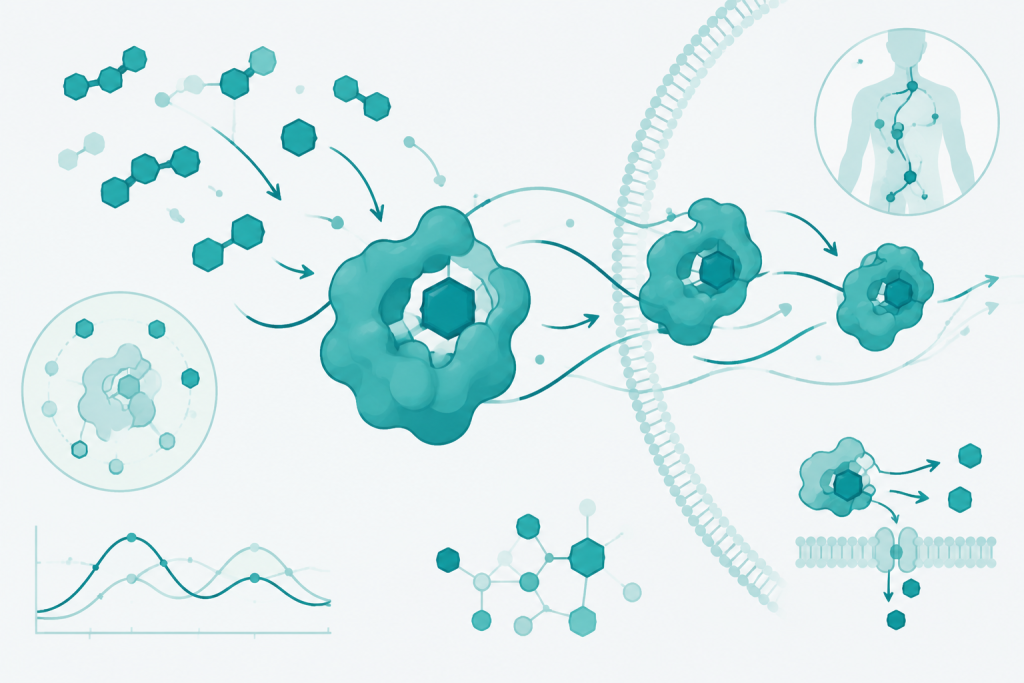
If you’ve ever looked at a blood test and wondered why your total testosterone looks fine while you still feel off, SHBG might be one piece of the puzzle. Sex hormone-binding globulin, or SHBG, is a protein made mainly by the liver that binds testosterone and oestradiol. It does not produce hormones, but it affects how much remains unbound or loosely bound in the bloodstream.
- SHBG is a liver-produced carrier protein that binds testosterone and oestradiol, influencing the amount of hormone that is bioavailable.
- Anabolic steroid use often lowers SHBG, which can increase the free fraction but also complicate recovery and the interpretation of blood tests.
- Both very low and very high SHBG can occur alongside metabolic or hormonal issues; interpreting it alongside other results can provide useful context.
What Is SHBG and Why Does It Matter?
SHBG stands for sex hormone-binding globulin. It is a glycoprotein produced mainly by the liver, and its job is to bind sex hormones in the bloodstream — primarily testosterone and oestradiol, the main form of oestrogen in men. Hormone bound to SHBG is generally less available to enter cells than the free fraction. Only a small proportion of circulating hormone remains completely free. Another proportion is loosely bound to albumin and is often considered bioavailable because it can dissociate relatively easily.
This matters because blood tests usually measure total testosterone, which includes the SHBG-bound fraction, the albumin-bound fraction and the small free fraction. The free fraction and some of the albumin-bound fraction are more readily available to tissues. If SHBG levels change, the same total testosterone result may correspond to different free or bioavailable testosterone levels.
One way to think about it is that total testosterone is the amount of fuel in the tank, while free testosterone is the portion more readily available to the engine. SHBG affects how much remains bound. Research discussed in PMC6814954 explores how SHBG influences the bioavailability of sex steroids, which is why it can provide useful context when interpreting hormone panels.
For steroid users, this is particularly relevant. Many anabolic compounds lower SHBG, which can increase the unbound fraction of testosterone and other hormones. That may alter the effects of a cycle, but it also complicates the interpretation of blood work, decisions about ancillary medicines and the assessment of recovery afterwards. SHBG is therefore one part of the wider picture rather than a result to interpret in isolation.
SHBG and Testosterone: The Relationship Steroid Users Need to Understand
The relationship between SHBG and testosterone is one of the more easily misunderstood parts of hormone blood work. When SHBG is high, more testosterone is bound, so less may be available in the free fraction. When SHBG is low, the free fraction may be larger. As a result, two people with identical total testosterone levels can have different free testosterone levels depending on their SHBG.
During anabolic steroid use, SHBG often falls. Exogenous androgens can provide feedback that reduces SHBG production, although the size of the change varies between compounds and individuals. Some users show very low SHBG alongside elevated total testosterone. In that situation, the free testosterone level may be considerably higher than the total result alone would suggest.
After stopping steroids, SHBG does not necessarily return to its previous level immediately. It may change during recovery, particularly while endogenous testosterone production and the hypothalamic–pituitary–gonadal axis are still adjusting. If SHBG is relatively high while testosterone production remains low, the free fraction may be lower than the total testosterone result suggests. This is one possible explanation for why some users continue to feel unwell even when total testosterone is within a laboratory reference range.
The practical takeaway is that total testosterone alone provides an incomplete picture. If you are trying to understand the amount of hormone readily available to tissues, SHBG and free testosterone should be considered together. Free testosterone can be measured directly or calculated using total testosterone, SHBG and albumin. PMC6327036 examines how SHBG changes in settings involving altered sex-steroid exposure, which may be relevant to people using or recovering from anabolic steroids.
Low SHBG: Causes, Symptoms, and What It Feels Like
Low SHBG occurs in several situations. Common non-drug associations include insulin resistance, obesity, type 2 diabetes and metabolic syndrome. Higher insulin levels may reduce SHBG production in the liver. For that reason, low SHBG can be a marker of metabolic disturbance rather than simply an isolated hormone finding. If your SHBG is low and you are not using steroids, a clinician may consider it alongside glucose-related results, body composition and other relevant markers.
Anabolic steroid use is another common cause. Exogenous androgens can suppress hepatic SHBG production. Some users assume that low SHBG is necessarily beneficial because it may increase free testosterone. Persistently low SHBG can also occur alongside metabolic problems, changes in liver function or high androgen exposure, so the result needs to be interpreted in context.
In men, low SHBG may occur alongside acne, increased oiliness, mood changes and changes in libido, although these symptoms have many possible causes. Some men with very low SHBG report feeling overstimulated or having difficulty sleeping. In women, low SHBG is associated with a higher free-androgen index and may occur alongside hirsutism, irregular cycles, oily skin and acne. These are associations, not predictable outcomes for every individual.
Low SHBG is often associated with hyperinsulinaemia. When insulin remains elevated, the liver may produce less SHBG. This can increase the free fraction of testosterone and complicate the assessment of metabolic and hormonal health. For steroid users, low SHBG is therefore not automatically a favourable finding, particularly during periods of high calorie intake or reduced insulin sensitivity.
Whether low SHBG is favourable depends on the wider context. During a cycle, it may increase the free fraction of administered testosterone. Over the longer term, persistently low SHBG — particularly when it occurs alongside metabolic dysfunction — is better viewed as a finding to investigate than one to celebrate. The aim should not be to pursue a particular SHBG value without considering symptoms, other test results and overall health.
High SHBG: Symptoms, Causes, and Impact on Hormone Availability
High SHBG is associated with a smaller free fraction of testosterone and oestradiol, although the effect depends on the rest of the hormone profile. SHBG can increase with age and may also be affected by liver disease, hyperthyroidism, certain medicines and other health conditions. It may change during recovery from steroid use as androgen exposure falls, but the direction and timing vary between individuals.
People with high SHBG may report symptoms associated with low free testosterone, including low energy, reduced libido, difficulty gaining or maintaining muscle, mood changes, brain fog and lower motivation. In women, high SHBG may be associated with lower free oestradiol and androgens, and can occur alongside low libido, vaginal dryness or menstrual irregularities. These symptoms are non-specific and can have many causes, so high SHBG is only one part of the assessment.
A common misconception is that high SHBG necessarily means high total testosterone. That is not the case. SHBG responds to several physiological signals, not just testosterone levels. Someone with low total testosterone and high SHBG may have a particularly low free fraction, while someone with high total testosterone and normal SHBG may have a higher free fraction. Total testosterone, SHBG and free testosterone are more informative when considered together than any one result alone.
For reference, typical adult male SHBG ranges are roughly 10 to 50 nmol/L, though laboratories use different cut-offs. Adult females usually have higher baseline SHBG, commonly in the range of 30 to 90 nmol/L. These ranges vary by laboratory and assay method, so compare your result with the reference interval on the report rather than relying on a single memorised range.
Which Steroids Affect SHBG and How?
Not all anabolic steroids affect SHBG to the same extent. Many androgenic compounds lower it during use, while the magnitude of the change depends on the compound, dose, duration and individual response. Stanozolol, commonly known as Winstrol, is often associated with marked SHBG suppression. Other DHT-derived compounds and testosterone esters may also reduce SHBG, although the response is variable.
The mechanism is thought to involve feedback from exogenous androgens that alters hepatic SHBG production. The relationship is not simply proportional to the apparent androgenic strength of a compound, and individual responses can differ according to genetics, dose, duration and the other substances used.
Do all steroids decrease SHBG? Many anabolic-androgenic steroids can lower it while they are active in the body, but the extent varies and a universal rule is not reliable. Milder exposure may cause a smaller change. Some compounds with a high affinity for SHBG may also compete with endogenous testosterone for binding sites, potentially affecting the free fraction.
Steroid-induced SHBG suppression can complicate blood-test interpretation during a cycle. Total testosterone may be high while the free fraction is disproportionately elevated. After the cycle, changes in androgen exposure may be accompanied by changes in SHBG, which can make post-cycle results difficult to interpret if total testosterone is considered on its own.
Managing SHBG Levels: Can You Fix Low or High SHBG?
If low SHBG occurs alongside metabolic problems, addressing overall metabolic health may be appropriate. This can include maintaining a healthy body composition, regular resistance and aerobic exercise, adequate sleep and a dietary pattern that supports stable blood glucose. Reducing excess body fat, particularly visceral fat, may also be relevant. These measures support general health, but they do not guarantee a particular SHBG result.
For steroid users, the situation is more complicated. SHBG suppression may occur during a cycle and is not usually something to correct with supplements or lifestyle changes alone. Monitoring is more useful than chasing a single number. After a cycle, changes in endogenous testosterone production, androgen exposure and metabolic health may all affect SHBG, so persistent or concerning results should be discussed with a qualified healthcare professional.
Is it better to have low or high SHBG? There is no universal answer. Lower SHBG may increase the free fraction, but very low levels can occur alongside metabolic problems. Very high SHBG may be associated with a low free fraction even when total testosterone appears adequate. The most useful interpretation considers symptoms, total and free testosterone, albumin, oestradiol and relevant health markers together.
SHBG testing can form part of a broader hormone assessment, especially during and after steroid cycles. Looking at SHBG alongside total testosterone, free testosterone or calculated free androgen index, oestradiol and markers such as fasting insulin can provide more context than testosterone alone. If you are putting together a monitoring plan, our full breakdown of blood markers to track during cycles covers the wider panel worth reviewing.
This article is for informational purposes only and is not a substitute for professional medical advice, diagnosis or treatment. Speak with a qualified healthcare provider before making decisions about hormone use, especially if you are pregnant, taking medicines or have a chronic health condition. Individual responses to steroids and changes in SHBG vary, and no specific result can be guaranteed.